— on tennis, tradition, and the joy of unexpected beginnings
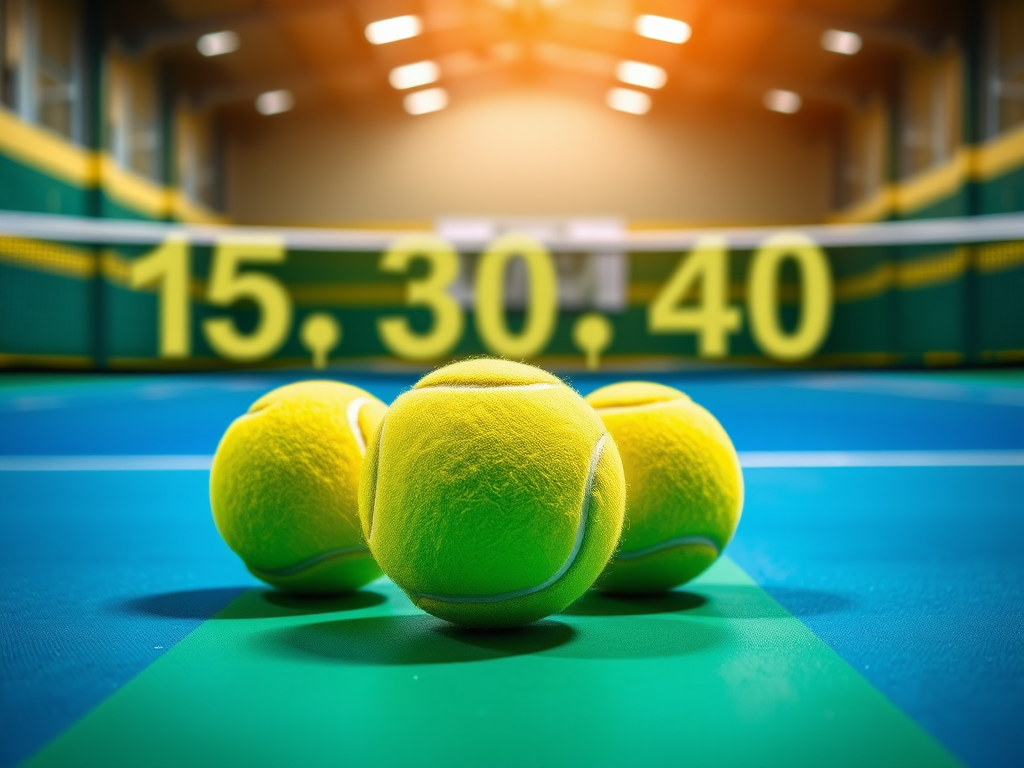
Sometimes, it’s the quietest questions that linger the longest. For me, one of those questions has always been: Why does tennis score the way it does? Fifteen, thirty, forty, and something called love—a sequence that’s always felt more like poetry than math.
My own journey with tennis started in an almost accidental way. Our girls had asked to try tennis, so we signed them up for group lessons at a local club. While they ran around with oversized rackets and bright-orange beginner balls, I stood off to the side—watching, waiting. But the club, wise in the way of keeping parents occupied and curious, had an adult beginner class running at the same time. I figured, Why not? One class couldn’t hurt.
Turns out, it was love at first sight.
From that very first clumsy swing, I fell hard—and I’ve never looked back. That one small yes, that half-curious, half-bored decision to pick up a racket while my kids had their lesson… it’s easily one of the best decisions I’ve ever made.
Tennis has become my escape, my meditation, my moving prayer. And recently, in true wallflower fashion I let my curiosity, that has followed me since the beginning, meander. I followed it like a glimmer—small, gentle, but tugging at me. So I sat down (with tea in hand, of course, or maybe it was a glass of wine… don’t remember) and did a little digging: Why does tennis score the way it does?
As it turns out, tennis has roots going all the way back to medieval France. It began as jeu de paume—the “game of the palm”—when players hit the ball with their bare hands. Over centuries, it evolved into the game we know today, but the scoring remained wonderfully peculiar.
The best theory? The original score may have come from a clock face—15, 30, 45—but eventually, 45 was shortened to 40 – maybe it was for simplicity or rhythm. And “love,” representing zero, likely came from the French word l’oeuf, meaning “egg.” A soft, round, nothing. Still, most of us tennis-obsessed people like to believe there’s something sweeter to it—that it means you’re playing not for points, but for the joy of it.
And joy is exactly what tennis has become for me.
When I hear “Forty–Love” now—whether it’s during a match, practice, or even my daughter’s lessons—I hear more than just numbers. I hear the echo of a centuries-old tradition, the rhythm of something both strange and sacred, and the heartbeat of a game that somehow found its way into my life exactly when I didn’t know I needed it.
Tennis, like so many of life’s glimmers, came quietly. It asked for my attention gently, then held on with everything it had. It has become a source of strength, challenge, and comfort—a gift that began on the sidelines and moved to center court.
And maybe the scoring system, with all its mystery and charm, reflects what I’ve come to love about the game most: it doesn’t have to make perfect sense to be exactly what you need.
– The Wallflower
 Glimmers of The Wallflower
Leave a reply to Wimbledon Whites, Garden Courts, and the Beauty of Chasing Joy – Glimmers of The Wallflower Cancel reply